
What truly sets Fermi apart is that it does not outrightly help students. It does not jump to answers or short-circuit reasoning. Instead, it nudges students to recall fundamentals, think through the problem, and take ownership of their solution.
Grade handwritten math in minutes.
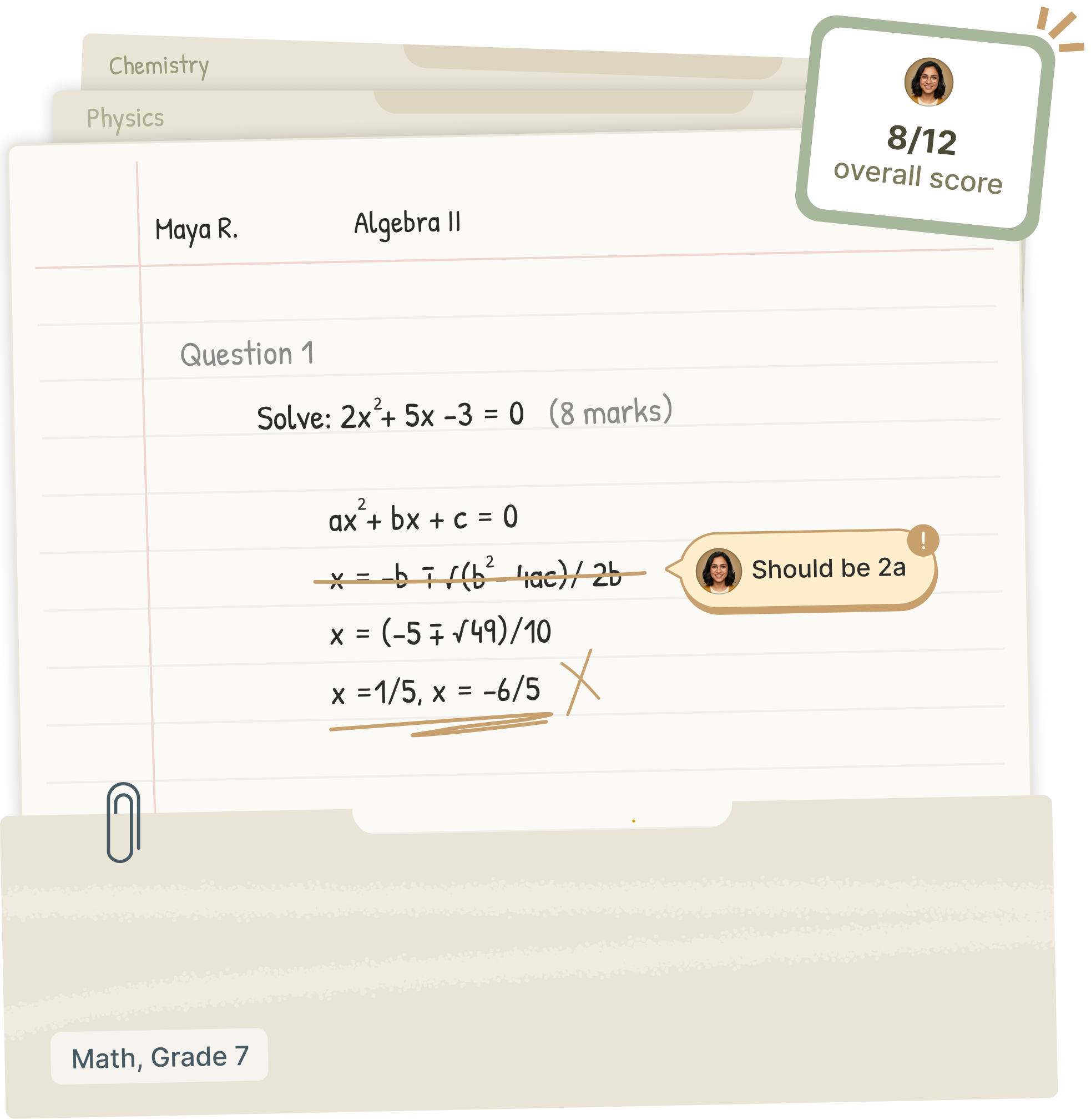
Upload assignments and worksheets. Fermi reads each handwritten paper, grades against your rubric, awards fair partial credit, and writes feedback in your voice.
FERPA-aligned. Student work is never used to train AI models.
Built for educators
Grading that thinks like an educator.
Reads handwriting
Built for how students actually work — corrections, reworks, the line crossed out. Real thinking, not just clean output.
Partial credit that’s actually fair
Marks for method, setup, and execution — not just for the final answer. Borderline cases come to you for the final call.
Grades to your rubric
Bring your own marking scheme, edit a template, or have Fermi draft one. The rubric is yours, not a generic answer key.
How it works
Four steps. No setup call required.
1
Upload assignments and worksheets.
Scanned submissions, work from the canvas, or pull straight from Google Classroom, Moodle, or any LMS
2
Set your rubric.
Upload your own, pick from a template, or have Fermi draft one for you. You approve before any grading starts.
3
Fermi grades.
About a minute per paper, with partial credit on the working and comments at the exact step that matters.
4
Review or auto-release.
Look over what Fermi graded, or trust it to auto-send. Nothing reaches a student without your sign-off.
After every assignment
Insights you can act on.
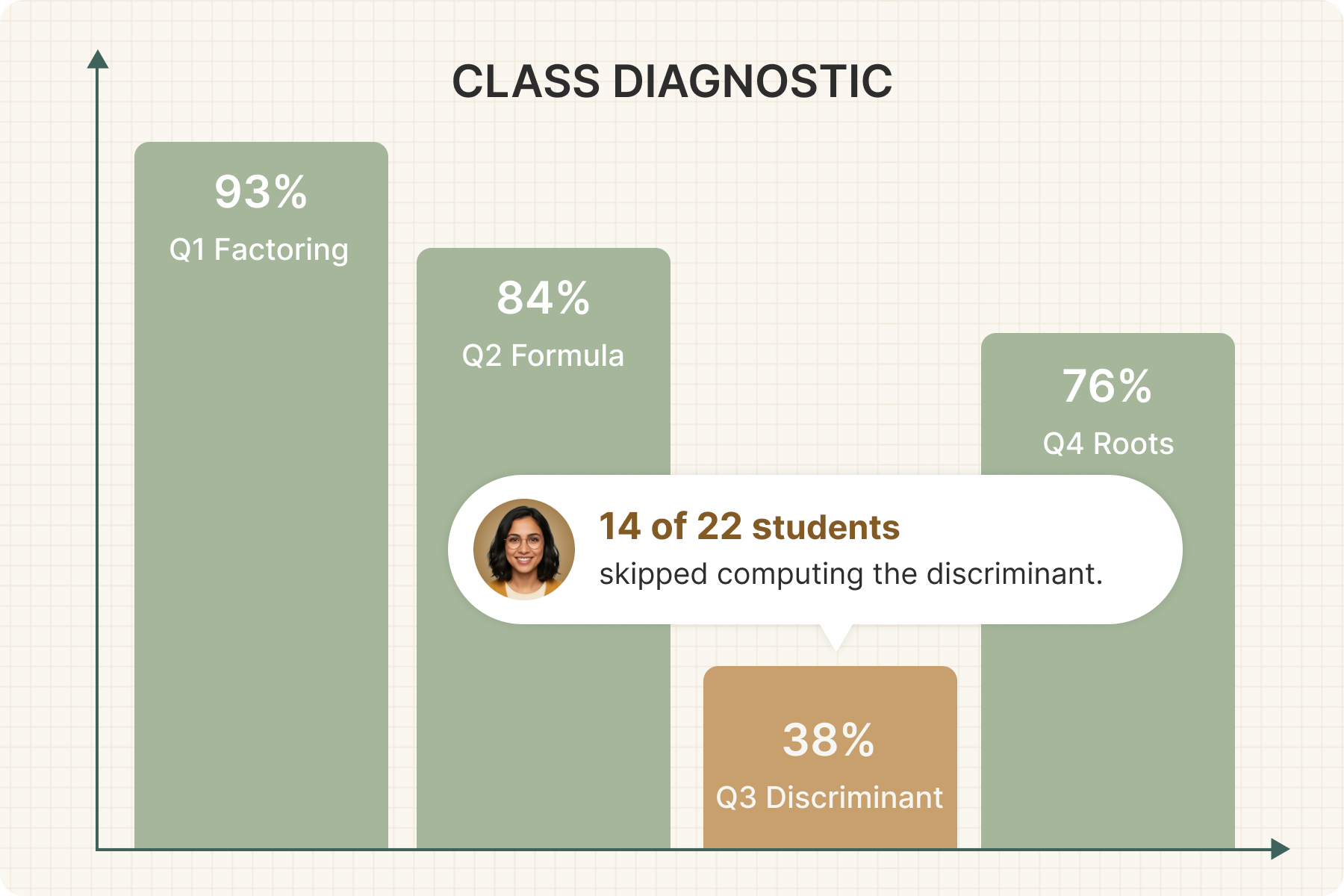
A diagnostic for the class
The patterns you’d see if you had time to read all 22 papers side by side. The misconception students share. The question everyone aced. The gap you didn’t know was there.
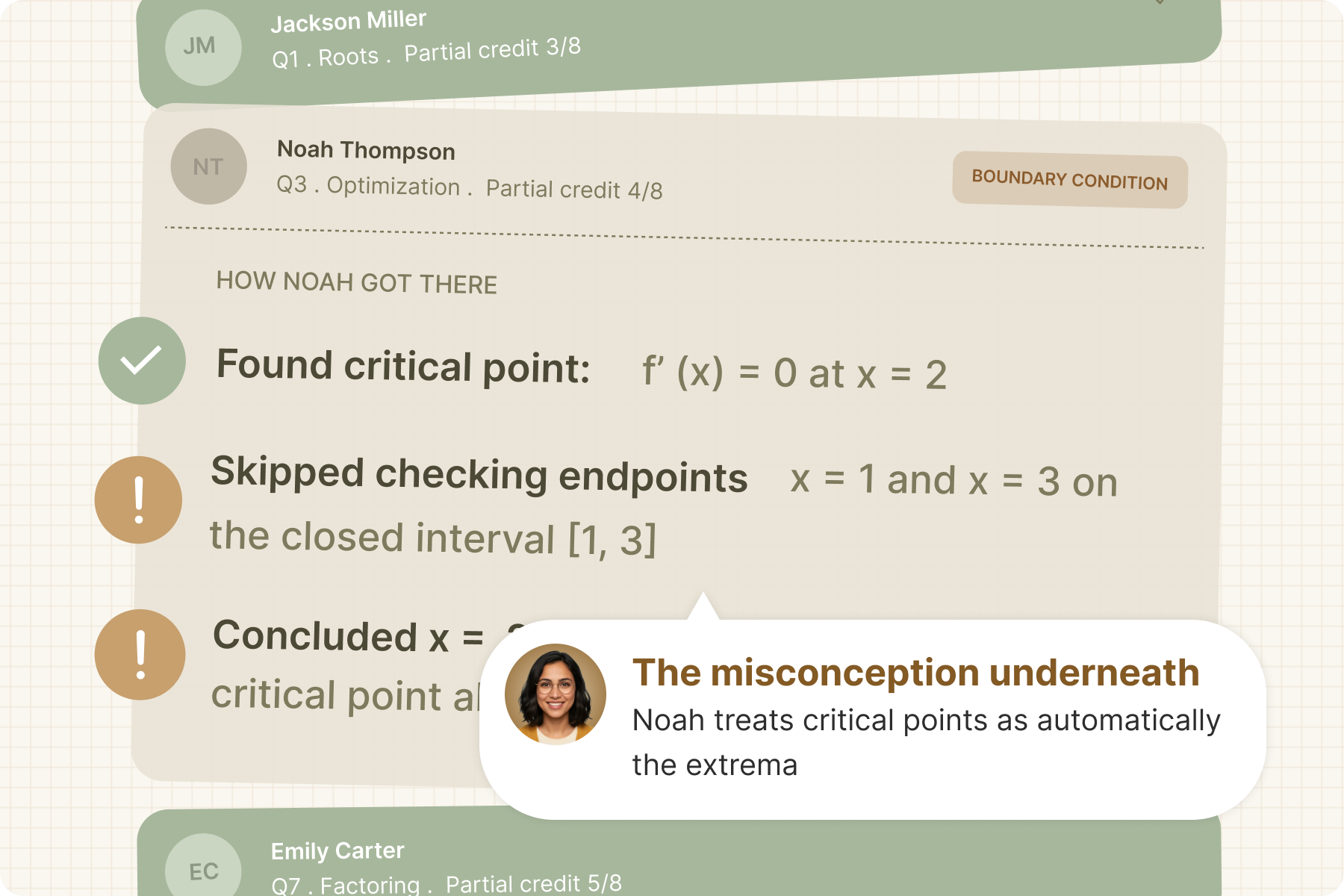
Depth on every student
Not just the score. The exact step where the student’s reasoning went wrong, the misconception underneath it. Per-student depth, on every paper.
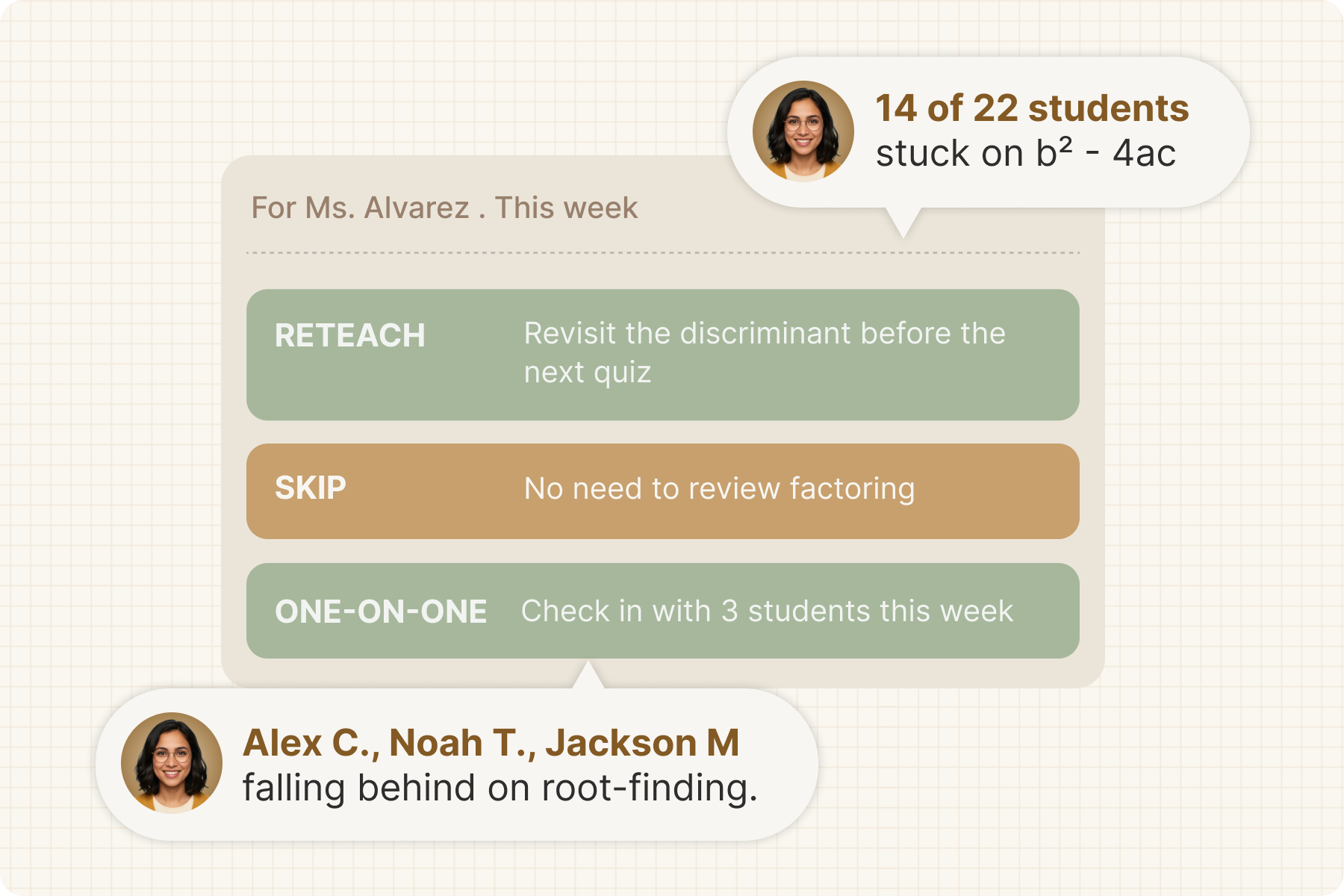
What to teach next
The teaching plan, half-written for you. What to reteach. Who to spend time with. What you can skip. Ready before the bell rings Monday.

Fermi enables truly personalized learning - I don't have to have a separate approach for each student.

Privacy and safety, by design
Built for school IT and legal teams from day one.
Regulatory frameworks
- FERPA-aligned USBuilt around the federal student-records framework your district already operates under.
- COPPA-aligned for under-13s USSchool-authorized use under district consent. We’ll review your technology waiver to confirm fit.
- State student-data agreements USDPAs available for California, Illinois, New York, Massachusetts, and other states with specific student-data laws.
- GDPR & GDPR-K compliant EU/EEAFull GDPR compliance, including the parental-consent and minimization rules of GDPR-K for under-16s.
- EU AI Act monitored EU/EEARegular audits of AI components for transparency and safety obligations under the EU AI Act, in force since 2025.
What happens to student work
- Never used to train AI modelsNot Fermi’s, and not the AI providers we use under contract. Student handwriting, rubrics, and graded work are not training data — ever.
- Encrypted everywhereAES-256 at rest. TLS 1.3 in transit. Hardware-isolated key management. Role-based access with audit logs.
- Never sold. Never used for advertising.No data sold to third parties. No advertising in the product. No behavioral profiles of students or educators built or shared.
- Schools own the dataEvery paper, rubric, and grade. We process it on your behalf — we don’t own it. Parents can request access through the school.
- Exit on your terms, within 30 daysOne click to export every paper, rubric, and grade. Account deletion completed within 30 days. We keep nothing after you go.
Try Fermi free.
No credit card. No setup call. Bring a single class onto Fermi and see what changes when grading takes minutes, not evenings.
For schools
Rolling out across more than one classroom?
We work with schools to bring handwriting-first grading and class-level insight to every educator. Training and rollout, completely handled.